
Updated 15 August 2026
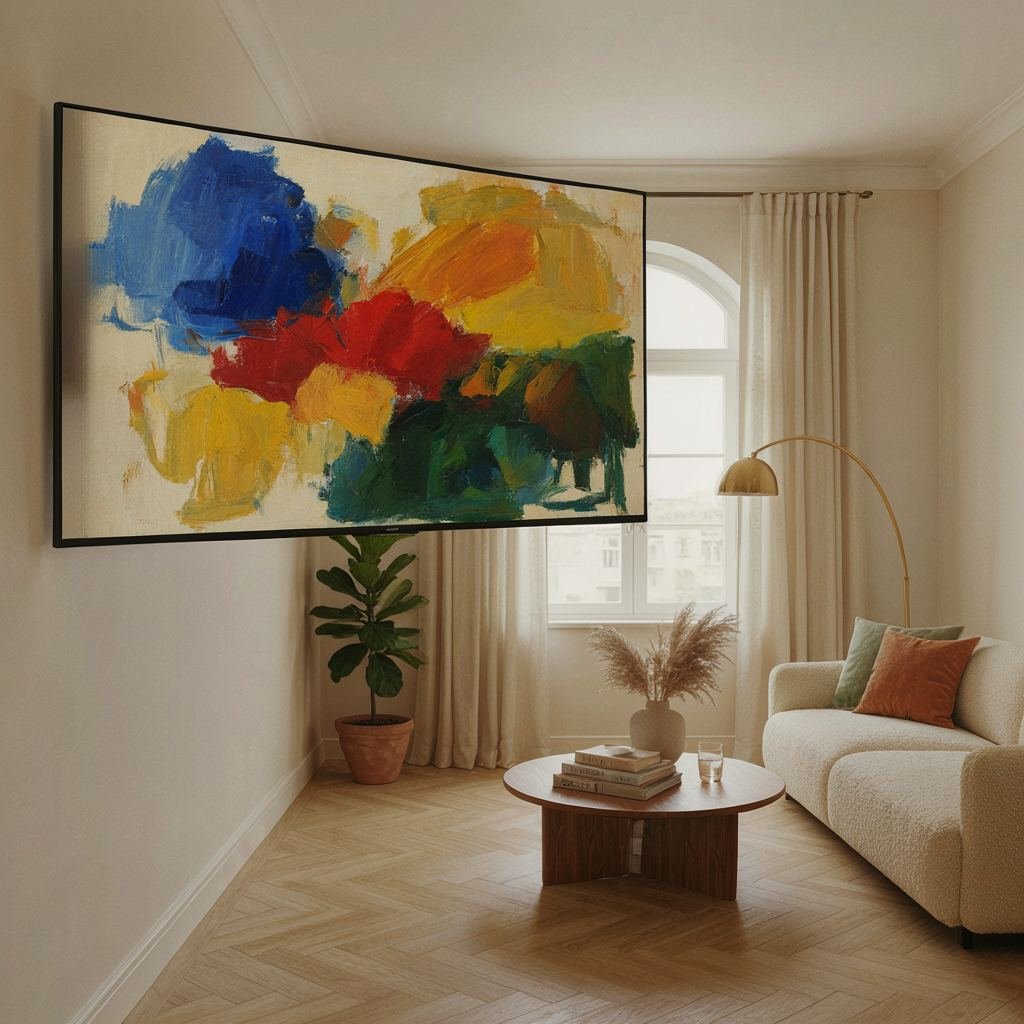
The Samsung Frame TV comes in seven sizes, from 32″ up to 85″, and picking the wrong one is the single most common regret we hear about. Too small and the “framed art” illusion falls apart from across the room; too big and it stops looking like a picture and starts looking like a TV that’s pretending. Here’s how to actually pick, plus what changes between sizes beyond the obvious.
Sizing it to your room, not your budget
The usual TV-sizing rule (roughly 1.5–2.5x the viewing distance in inches) still applies, but the Frame adds a second constraint: it needs to read as art, which means it should roughly match the scale of a real piece you’d hang in that spot. A 43″ over a narrow console looks like a TV. A 65″ centered on a proper wall, at the height a painting would hang, is what actually sells the illusion.
Samsung The Frame — 43″
Fits a bedroom, home office, or a narrow living-room wall without dominating it. This is the size to go with if you’re mounting above a console table rather than centering it as a standalone piece.
See Price on Amazon →Samsung The Frame — 55″
55″ is the size most people land on for a standard living room, but ratings vary noticeably between sellers and bundles on this size — read the specific listing’s reviews before buying, since some are open-box or third-party fulfilled.
See Price on Amazon →Samsung The Frame — 65″
If your wall can take it, 65″ is where the art illusion works best from a normal seating distance — big enough to read as a genuine gallery piece, not so big it reads as a screen.
See Price on Amazon →Samsung The Frame — 75″
Only makes sense in a room with real distance to it — a large open-plan living space or a media wall with 8+ feet of viewing distance. Below that it starts to overpower the art illusion.
See Price on Amazon →What actually changes between generations
Samsung updates the Frame lineup roughly once a year (the current generation is the LS03 series). The headline changes between generations are usually the processor (affects upscaling and Art Mode’s motion-sensor responsiveness), the anti-reflection matte finish on the screen, and occasionally the bezel attachment mechanism. The Art Mode experience itself — the museum-style art library, the ambient light sensor that matches brightness to the room — has been consistent across recent generations, so an older-generation Frame at a discount is rarely a bad trade if the price gap is large.
The bezel is a separate purchase
Every size ships with a plain color bezel in the box (usually white or beige, model-dependent), and the customizable wood-tone and color bezels are sold separately, sized to match your exact TV size. If the “framed art” look is the whole reason you’re buying this TV, budget for the bezel swap — it makes a bigger visual difference than any spec on this page.
Mounting it flush
A Frame TV on a standard tilting or articulating mount still looks like a TV — the whole illusion depends on it sitting flush against the wall like a real frame. See our guide to mounting a Frame TV flush to the wall for which no-gap mounts actually work for each size.
This site is reader-supported and may earn a commission on qualifying bookings or purchases made through our links, including as an Amazon Associate. Prices and availability shown by our partners are always current on their own site; check the live listing before buying.